Author: Maya Fiddler

  • Stop Believing Design Myths

    Stop Believing Design Myths

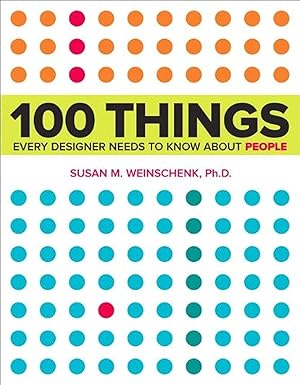
    Why Susan Weinschenk’s “100 Things Every Designer Needs to Know About People” Changed How I Approach Web Design

    When I opened Susan M. Weinschenk’s 100 Things Every Designer Needs to Know About People, I expected another design coffee-table book filled with pretty screenshots and surface-level advice. Instead, I found something far more valuable: a research-backed dismantling of design mythology that the industry has perpetuated for years.

    As someone who builds WordPress websites and designs digital experiences, I’ve absorbed countless “best practices” that feel universally true. Capitalize headings? Yes. Minimize clicks to conversion? Of course. Use mixed-case text because uppercase is harder to read? Absolutely—everyone knows that. But Weinschenk’s book, grounded in academic psychology research and behavioral science, reveals something uncomfortable: much of what we “know” about design is incomplete, oversimplified, or outright wrong.

    The Book That Actually Uses Science

    What immediately impressed me about Weinschenk’s work is her methodology. She didn’t write from intuition or anecdotal design experience. Instead, she spent months reading “lots and lots of research”—her own words—reviewing dozens of books and hundreds of peer-reviewed research articles. Then she combined these evidence-based insights with her 20+ years of designing technology interfaces. The result is 100 concise, actionable principles organized into chapters covering how people see, read, remember, think, make decisions, and feel.

    Each principle is presented in 1-2 pages, typically opening with a relatable real-world scenario, supported by research citations, visual examples, and concrete design takeaways. It’s the opposite of fluff—every page earns its space.

    The Capitalization Myth That Broke My Assumptions

    Let me start with the claim that made me question everything else: the all-caps myth (Principle #13: “It’s a Myth That Capital Letters Are Inherently Hard to Read”).

    For years, I’ve heard the conventional wisdom: ALL CAPS are harder to read because they form uniform rectangles, and readers recognize words by their shapes, not individual letters. This theory has been gospel in design circles. Weinschenk cites the actual research, and here’s the problem: that theory dates back to 1886, and it’s wrong.

    Modern research shows we don’t recognize words by shape. Instead, we recognize and anticipate individual letters in sequence—what’s called parallel letter recognition. When researchers (Paap, 1984; Rayner, 1998) tested reading speed with uppercase text, they found that uppercase is slower, but only because people aren’t accustomed to it. With practice, speed matches mixed-case text.

    Why does this matter for WordPress designers? It doesn’t mean you should suddenly write your entire website in caps. People perceive all-caps as “shouting,” and the unfamiliarity creates cognitive friction. But it kills the myth that uppercase letters are somehow inherently harder to parse. Understanding the why—familiarity, not neurological limitation—opens new design possibilities.

    The Navigation Myth: Not All Clicks Are Equal

    Now let’s address the obsession with minimizing clicks. In web design, we treat each click like currency. Reduce clicks. Flatten hierarchies. The assumption: more clicks = worse user experience. But Weinschenk’s research suggests the relationship is far more nuanced.

    The book dives deep into how people actually perceive web pages (Chapter 2: How People See), and here’s where it gets fascinating. Peripheral vision is far more important than most designers realize. Weinschenk cites Kansas State University research showing that while central vision identifies specific objects, peripheral vision captures the “gist” of an entire scene. People decide what a page is about from their peripheral vision in milliseconds, often before they consciously read anything.

    What does this mean for your WordPress site? It’s not the number of clicks that matters most—it’s whether users can quickly understand the purpose and hierarchy of your page. A well-designed navigation system that takes an extra click is far superior to a flat menu that confuses users about where to find information.

    This is supported by the principle of mental models (Principle #31): people have preconceived notions of where things “should” be. If your navigation violates their expectations, no amount of click-reduction will save you.

    Eye-Tracking Doesn’t Tell the Whole Story

    Weinschenk also addresses a subtle but crucial limitation in how we validate design decisions: eye-tracking data is often misinterpreted (Principle #8: “People Can Miss Changes in Their Visual Fields”).

    Eye-tracking is a powerful tool—it measures where someone’s foveal (central) gaze is focused. The problem? It doesn’t measure attention. People’s eyes can look directly at something without consciously perceiving it. Weinschenk references the famous Gorilla experiment by Christopher Chabris and Daniel Simons: when people watch a basketball video while counting passes, about 50% miss a person in a gorilla costume walking across the screen—even though their eyes physically look at the gorilla.

    The implication for web design is humbling: just because your eye-tracking study shows users look at a certain button doesn’t mean they actually see it or understand its purpose. Context, expectation, and attention matter as much as where the eye lands.

    The Deeper Truth About Motivation and Engagement

    Beyond debunking myths, Weinschenk offers profound insights into human motivation that reshape how we design experiences. Principle #50 (People Are More Motivated as They Get Closer to a Goal) introduces the goal-gradient effect.

    Research from 1934 showed that rats running a maze toward food accelerated their pace as they neared the end. Modern studies by Ran Kivetz confirm humans do the same. This is why progress bars, loyalty cards with visible progress, and achievement milestones work so well.

    Even more interesting: people are MORE motivated by the illusion of progress. In Kivetz’s coffee shop study, customers with a frequent-buyer card that started with two boxes pre-stamped completed their card faster than those starting with a blank card—even though both required the same number of purchases. The perceived progress was motivating enough to change behavior.

    For WordPress e-commerce sites, this is golden. A checkout progress indicator showing “Step 2 of 4” isn’t just UX; it’s motivation design. It taps into deeply rooted human psychology.

    Variable Rewards and the Casino Effect

    Principle #51 (Variable Rewards Are Powerful) ventures into operant conditioning—Skinner’s work on reinforcement schedules. This is where design intersects with behavioral psychology in ways that feel almost manipulative (and ethically, deserves careful consideration).

    Weinschenk explains four types of reinforcement schedules: fixed interval, variable interval, fixed ratio, and variable ratio. The variable ratio schedule—where you don’t know exactly when the reward comes, but the odds improve with each attempt—is the most addictive. It’s how slot machines work.

    Understanding this matters not because you should design deceptive websites, but because it reveals how engagement systems actually function. If you’re building a WordPress site with gamification, user rewards, or social features, knowing that variable rewards create stronger engagement than predictable rewards is essential. The question is whether you use this knowledge ethically.

    What Makes This Book Different From Other Design Reads

    In an industry saturated with design books, 100 Things Every Designer Needs to Know About People stands out for several reasons:

    1. Research-Driven, Not Opinion-Based
    Every principle is backed by citations. Weinschenk doesn’t just assert; she references academic sources. If you dig into the bibliography (it’s extensive), you can verify and explore further.

    2. Myth-Busting Instead of Rule-Giving
    Rather than prescriptive “do this” advice, Weinschenk often starts by dismantling false beliefs. This approach is more intellectually honest and more useful—it teaches you how to think about design problems rather than giving you templates.

    3. Practical Without Being Shallow
    The takeaways at the end of each section are immediately applicable to WordPress sites, web apps, and digital products. But they’re never simplistic. Each principle forces you to think deeper about trade-offs and context.

    4. Breadth Across Human Cognition
    The book covers vision, memory, attention, motivation, emotion, decision-making, and social behavior. It’s not just “web design best practices”—it’s a mini-course in applied psychology for designers.

    How This Book Changes Your Design Process

    Since reading Weinschenk, my approach to design decisions has fundamentally shifted. Instead of asking “What does best practice say?” I now ask “What does human cognition actually support?”

    This leads to different conversations with clients:

    • On navigation complexity: “We might need an extra click, but if it matches how users mentally model the site, they’ll actually navigate faster and feel more confident.”
    • On text formatting: “We don’t need to avoid caps; we need to use them strategically where they work for attention or hierarchy, not avoid them blindly.”
    • On call-to-action buttons: “This button needs visual cues showing it’s clickable—not just color and text.”
    • On progress and goals: “Every step toward conversion should be visible. Even the illusion of progress motivates users to continue.”

    Should You Read It?

    If you build websites, design user experiences, or care about why people behave the way they do online, yes. Absolutely.

    The book isn’t long—about 300 pages—but it’s information-dense. You won’t read it cover-to-cover in an evening. Instead, it works best as a reference guide you return to when designing specific features or troubleshooting user behavior problems.

    It’s also available in a follow-up edition: 100 More Things Every Designer Needs to Know About People (2016), which expands on topics like interface design, embodied cognition, and diversity.

    The Bigger Picture

    What I appreciate most about Weinschenk’s work is that it advocates for designing with people, not for assumptions about people. So much of design thinking—in WordPress customization, e-commerce, SaaS interfaces—is based on what stakeholders believe users want, not what research actually shows.

    By grounding design in behavioral science, Weinschenk empowers designers to make stronger arguments, ask better questions, and create experiences that respect how human cognition actually works.

    In a field where trends change every season and “best practices” are constantly updated, it’s refreshing to read something rooted in timeless principles about how humans perceive, think, and decide. That’s the real value of this book: it’s not about what’s trendy in design. It’s about what works because of how brains work.


    Have you read Weinschenk’s book? What principle surprised you most? What design myth have you held on to that this research challenges? Share your thoughts in the comments—I’d love to know which insights resonated with your own design practice.

  • 5 Website Mistakes That Are Costing You Sales

    5 Website Mistakes That Are Costing You Sales

    5 website mistakes silently reduce conversions by slowing users down, confusing them, or breaking trust, and they are especially dangerous when you rely on your site to generate leads or sales in the EU. The good news is that each mistake can be fixed with clear UX, performance, and legal-compliance improvements that work well for European audiences.


    1. Your website is painfully slow

    Slow websites are one of the most common reasons visitors leave before buying or sending an enquiry. Multiple studies show that even a 1‑second delay can reduce conversions by around 7% and that more than half of mobile users abandon pages that take more than 3 seconds to load.

    On WordPress, slow performance often comes from oversized images, too many plugins, and cheap or misconfigured hosting. For EU customers, performance matters even more because visitors might browse on mobile data or during short breaks, and Google’s Core Web Vitals use speed as a ranking signal for search results.

    Action steps you can take:

    • Compress and resize images instead of uploading original photos straight from your camera or stock site.
    • Audit your plugin list and remove everything you don’t really need; keep the rest updated to reduce bloat and security risks.
    • Use caching and a content delivery network (CDN) to serve assets closer to users across the EU, which shortens load times.
    • Choose a hosting provider that is optimized for WordPress and has data centers in Europe to reduce latency for EU visitors.

    2. Navigation makes people feel lost

    If visitors struggle to find what they need, they will not stay long enough to buy from you. Research on e‑commerce usability shows that confusing menus, too many options, and dead‑end pages dramatically increase abandoned browsing sessions and reduce product discovery.

    Typical navigation mistakes include hidden or overcrowded menus, unclear labels (“Solutions” instead of “Web Design”), and calls‑to‑action that compete with each other. For service businesses in the EU, this often means potential clients never reach key pages like “Services”, “Pricing”, or “Contact”, so you lose enquiries that should have been easy wins.

    Action steps you can take:

    • Keep your main menu simple: link only to core pages such as Home, Services, Portfolio, About, Blog, and Contact.
    • Use clear, descriptive labels so visitors instantly understand where each link goes, rather than internal jargon.
    • Design a logical content structure with internal links that guide users from informational blog posts to service pages and contact forms.
    • Make your primary call‑to‑action (e.g. “Request a Quote”) visually prominent and repeat it in logical places across the site.

    3. Your mobile experience is an afterthought

    More than half of online shoppers browse and buy on mobile devices, yet many websites still prioritize desktop layouts. Studies on mobile access show that when tasks take longer or pages are harder to use on smartphones, conversion rates drop sharply compared to desktop.

    Common issues include text that is too small, buttons that are hard to tap, layouts that break on smaller screens, and pop‑ups that block content. In the EU, where consumers compare offers quickly on their phones and regulators pay attention to dark patterns, clumsy mobile designs can feel unprofessional or even manipulative.

    Action steps you can take:

    • Use a responsive WordPress theme that adapts to different screen sizes, and test your site on several devices, not only in a desktop browser.
    • Ensure text is readable without zooming, that buttons have enough size and spacing, and that forms are easy to complete on a small screen.
    • Reduce unnecessary pop‑ups on mobile and avoid designs that trick users into clicking, as “dark patterns” can both hurt trust and attract regulatory attention.
    • Monitor mobile performance separately in your analytics so you can spot and fix mobile‑specific drop‑offs.

    4. You are not building enough trust

    Even if your design looks modern, lack of trust signals can make EU customers hesitate to contact you or enter payment details. Research into conversion rate optimization highlights trust, usability, and aesthetics as core elements that determine whether visitors feel safe enough to buy.

    Trust problems include missing HTTPS, no clear contact information, vague pricing, and absence of testimonials or reviews. For EU visitors, clear legal pages (imprint, privacy policy, terms and conditions) and transparent information about returns and customer support are especially important and sometimes legally required.

    Action steps you can take:

    • Use an SSL certificate so your site loads over HTTPS and display recognizable security indicators, especially on checkout or contact pages.
    • Add genuine testimonials, case studies, and logos of clients or partners to show that real people and businesses already trust you.
    • Provide clear, easy‑to‑find information about who you are, where you are based in the EU, and how people can contact you (email, address, legal notice).
    • Write straightforward pricing or at least transparent “starting from” rates, so potential clients feel safe enough to reach out.

    5. You ignore EU privacy and compliance basics

    For websites targeting visitors from the European Union, ignoring GDPR and the ePrivacy Directive can damage both trust and business risk. EU guidance explains that cookies and other tracking technologies which process personal data require informed, opt‑in consent, and visitors must be able to withdraw consent as easily as they gave it.

    Typical mistakes include cookie banners that pre‑check boxes, hide the “Reject” option, or start tracking before any consent is given. These patterns not only harm user experience but can also be considered non‑compliant “nudges” or dark patterns that manipulate people, something recent research and regulators increasingly criticize.

    Action steps you can take:

    • Implement a GDPR‑compliant cookie banner that explains what cookies you use, why you use them, and provides equal prominence to “Accept” and “Reject” or granular options.
    • Ensure that non‑essential cookies (analytics, marketing, tracking pixels) are blocked until the user has given explicit consent.
    • Maintain an up‑to‑date privacy policy and, where required, an imprint or legal notice that reflects EU and local country requirements.
    • Avoid deceptive designs that hide important choices or push people into consent; this reduces legal risk and supports long‑term customer relationships.

    Why fixing these 5 mistakes increases your sales

    Conversion research shows that performance, usability, trust, and compliance work together as a system: when one is weak, the whole experience suffers. By speeding up your WordPress site, simplifying navigation, improving mobile experience, adding visible trust signals, and respecting EU privacy rules, you make it easier for visitors to say “yes” to your offer.

    For EU‑focused businesses, this combination does more than boost numbers in analytics; it also supports long‑term reputation in a market where digital experiences and regulations evolve quickly. A small set of targeted improvements can turn your website from a hidden bottleneck into a reliable engine for new leads and sales.


  • How to Align Your Website with Your Business Plan

    How to Align Your Website with Your Business Plan


    Your Website Should Serve Your Goals

    I often meet business owners who have a website, but when I ask, “How does it fit into your overall business plan?”, the answer is usually unclear. Your website shouldn’t exist in isolation—it’s a tool to achieve your business goals. By aligning it with your business plan, you can ensure it actually contributes to growth, not just looks pretty online.


    1. Start With Your Business Plan

    Before we even think about design or features, take a step back and look at the big picture:

    • Target audience – Who are your ideal customers? What problems are you solving for them?
    • Value proposition – Why should someone choose your product or service over others?
    • Revenue streams – How will your website contribute to sales, subscriptions, or leads?

    Pro Tip: I like to create a one-page “website goals map” that directly links each element of the business plan to a website function. It’s a simple tool, but it prevents a lot of wasted time later.


    2. Define Website Objectives That Match Business Goals

    Once you know your plan, translate it into concrete website objectives:

    • Lead generation – If your business plan focuses on new client acquisition, make forms, calls-to-action, and landing pages your priority.
    • Sales & e-commerce – If online revenue is key, focus on product pages, checkout flow, and trust-building elements like reviews.
    • Brand authority – If building credibility is essential, prioritize case studies, blog posts, and expert content.

    Example: One client wanted more corporate clients. We created a dedicated “Services for Businesses” section and added downloadable resources for prospects. Within 3 months, inquiries doubled.


    3. Identify Key Metrics (KPIs)

    A website without metrics is like driving without a speedometer. Decide how you’ll measure success:

    • Number of inquiries, quote requests, or newsletter sign-ups.
    • Sales or revenue generated directly from the website.
    • Engagement metrics: time on page, downloads, or repeat visits.

    Pro Tip: Pick 3–5 KPIs that truly matter. Too many metrics can be overwhelming and distract from what really drives business growth.


    4. Optimize the User Journey

    Think of your website as a map that guides your visitor toward a goal. Every page should have a purpose:

    • Clear calls-to-action: “Request a Quote,” “Book a Call,” or “Buy Now.”
    • Logical navigation: Visitors should never wonder what to do next.
    • Supporting content: Blog posts, FAQs, or testimonials to build trust along the journey.

    Tip: I often create a “visitor journey diagram” for clients. It helps visualize how someone moves from first visit to becoming a customer.


    5. Continuous Measurement and Improvement

    Even after launch, your work isn’t done. A website aligned with your business plan requires ongoing attention:

    • Track your KPIs and analyze what works and what doesn’t.
    • A/B test landing pages, calls-to-action, and content placement.
    • Update content and design to reflect changes in your business goals.

    Example: A small e-commerce client saw a 15% increase in sales after just two months of testing different checkout page layouts.


    Conclusion – Your Website Should Work as Hard as You Do

    By connecting your website directly to your business plan, it becomes more than just a digital presence—it becomes a growth engine for your business.

    If you’re ready to make your website an integral part of your business strategy, I can help you map your goals, set measurable objectives, and design a site that delivers real results.


  • Why a “Pretty” Website Alone Won’t Grow Your Business

    Why a “Pretty” Website Alone Won’t Grow Your Business

    A Website is More Than Just Design

    When I first started working with clients, I often heard: “I just want a beautiful website.” And while aesthetics are important, I quickly realized that a website’s beauty alone doesn’t pay the bills. A website should be an active business tool, not just an online brochure. If it’s not aligned with your business goals, it may look stunning but won’t actually help your business grow.


    1. What Can Your Website Actually Do for Your Business?

    A well-designed website can do much more than look nice—it can drive results. Here’s how:

    • Generate leads – Collect contact information through newsletter sign-ups, inquiry forms, or downloadable resources. For example, a simple “Request a Quote” form can turn casual visitors into real business opportunities.
    • Sell products or services – An online store or booking system can help you sell directly through your website 24/7.
    • Build your brand – Showcase your expertise, create trust, and strengthen your reputation in your industry. This is especially important for service-based businesses where credibility is key.
    • Support customers – Offer FAQs, live chat, or appointment scheduling to improve customer experience and reduce workload.

    Tip: If you can’t clearly answer the question, “What do I want my website to achieve?” in one sentence, it’s a sign that your site isn’t aligned with your business goals yet.


    2. The Risks of a Website Without a Business Focus

    When a website is created just for its looks, a few common problems arise:

    • Visitors come, but don’t convert into customers.
    • Marketing campaigns are less effective because the website isn’t optimized to support them.
    • The investment in the site doesn’t deliver real value to your business.

    Example: I once worked with a client whose online store was visually stunning but very slow and hard to navigate on mobile. Despite hundreds of visitors each month, nearly 70% left without making a purchase. Beautiful—but dead in terms of business impact.


    3. How to Turn Your Website into a Business Asset

    Here’s a step-by-step approach I use with my clients to make websites work for their business:

    1. Define your goals – Do you want more inquiries, sales, newsletter sign-ups, or something else? Being specific helps design and functionality align with your goals.
    2. Identify the metrics – Decide how you’ll measure success: number of leads, sales, email subscribers, or other key indicators.
    3. Map the user journey – Think about how a visitor moves from landing on your site to taking the desired action. Each page should guide them naturally toward conversion.
    4. Measure and optimize – Track your site’s performance and make adjustments as needed. Websites are never “done”; they grow and improve over time.

    Pro Tip: I often create a simple “conversion path” diagram for my clients, showing every step from first visit to final action. It’s amazing how much clarity it brings!


    4. Why Having a Professional Help Matters

    Design alone won’t turn your website into a growth engine. A developer or designer who understands business objectives can help you:

    • Translate your business goals into functional website features.
    • Optimize the user experience to maximize conversions.
    • Ensure your website actually delivers measurable results.

    If you want a website that not only looks great but also drives revenue and growth, I’d love to help. Together, we can make sure your website works as hard as you do.